
The Automation Decision Framework
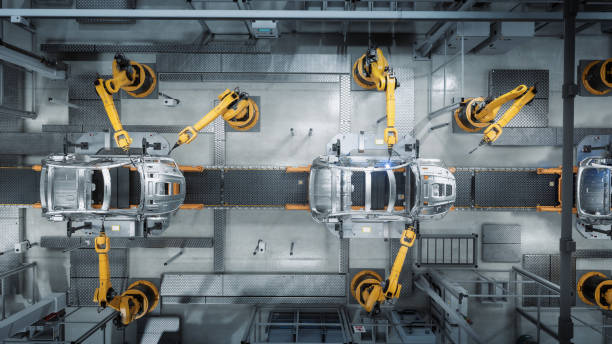
Manufacturing automation investments — from simple conveyor systems to sophisticated robotic cells and autonomous guided vehicles — require a capital investment that must be justified by the operational improvements the automation delivers. The automation decision framework that most reliably produces positive returns: beginning with a clear identification of the specific operational problem the automation is solving (not the general desire to be more automated, but the specific bottleneck, quality problem, labour challenge, or safety risk that the investment addresses), then quantifying the current cost of that problem and comparing it against the fully-loaded cost of the automation solution including installation, integration, maintenance, and the productivity lost during implementation.
The automation business case that most consistently overestimates return and underestimates cost: the one that counts only the direct labour replaced by the automation and ignores the maintenance engineering, programming, and integration costs that automation requires. The robotic cell that replaces two machine operators also requires a maintenance technician who understands robotics, a process engineer who can program and modify the robot, and an integration infrastructure that connects the robot to upstream and downstream processes. When these costs are included in the full cost of automation, the business case is less favourable than the simple labour replacement calculation suggests — which does not mean the automation is wrong, but means the analysis must be complete.
Identifying the Right Automation Opportunities
The manufacturing tasks that most consistently produce positive automation ROI when automated: high-volume repetitive tasks that require consistent precision over extended periods (where human fatigue degrades quality), physically hazardous tasks where automation eliminates worker safety risk (where the safety benefit adds value independent of the productivity benefit), tasks with defined input and output states that can be reliably sensed and controlled (where the automation system can detect and respond to variations without human judgment), and tasks that represent production bottlenecks where increased throughput would improve the overall system’s output.
The automation opportunity identification process that most effectively surfaces the highest-return investments: the value stream mapping of the production process combined with the analysis of the specific wastes and constraints that limit throughput and quality. The value stream map that shows where the largest inventory buffers accumulate (indicating upstream-downstream flow imbalances), where the most time is spent on non-value-adding activities, and where quality problems most frequently occur is pointing directly at the automation opportunities that would most improve overall system performance.
Types of Automation and Their Applications
The automation technology categories most applicable to manufacturing: fixed automation (hard tooling and dedicated equipment designed for high-volume production of specific products — the highest throughput and lowest per-unit cost when volume justifies the capital, but inflexible when product design changes), programmable automation (computer-controlled equipment that can be reprogrammed for different products — less throughput than fixed automation but able to accommodate product variety and design changes), flexible automation (robotic systems capable of handling multiple products with minimal changeover — the highest flexibility at higher capital cost), and collaborative automation (robots designed to work alongside human operators without safety fencing, enabling hybrid human-robot workflows for tasks that are partially automatable).
The automation type selection principle that most consistently matches the technology to the production context: choosing the automation flexibility level that matches the product variety and volume stability of the production context, not the highest flexibility available. The manufacturer of a single high-volume commodity product has different automation needs than the manufacturer of dozens of variants in smaller batch sizes; applying the same automation approach to both contexts produces either overinvestment in flexibility for the commodity producer or underinvestment in flexibility for the high-mix producer.
Implementation: Where Automation Projects Most Often Fail
The automation project failure modes that most commonly prevent realisation of the projected benefits: integration complexity that was underestimated during project planning (the robotic cell that performs its core function excellently but cannot interface with the existing production control system, material handling infrastructure, or quality management processes without custom development not included in the original project scope), change management deficits that produce operator resistance rather than adoption (the operators who were not involved in the automation design process and who have not been trained on the new system do not use it effectively), and insufficient commissioning and ramp-up time that compresses the period required to tune the system to production conditions.
The automation implementation practice that most reduces integration risk: the pilot or proof-of-concept project that tests the specific automation approach in the actual production environment before full commitment to the solution. The pilot reveals the integration challenges, the programming requirements, and the operator adoption issues that laboratory demonstrations and vendor simulations do not. The information produced by a well-designed pilot project — what works as expected and what requires modification before full deployment — is worth the investment many times over in the larger project it informs.
The People Dimension of Manufacturing Automation
The workforce management aspect of manufacturing automation that most determines whether the investment produces organisational support or resistance: the approach to the workforce transition that automation requires. The automation that displaces workers without providing a credible transition path — retraining for new roles in the automated environment, voluntary early retirement programmes, or redeployment to other areas of the facility — produces the resistance, morale problems, and reputational damage that can make subsequent automation projects more difficult to approve and implement.
The workforce transition approach that most effectively maintains organisational support for automation investment while managing the employment impact: the early and transparent communication with the affected workforce about what the automation will and will not do, combined with a genuine commitment to providing affected workers with the opportunity to develop the skills required in the automated environment. The worker who has been retrained as a robot maintenance technician or automation operator has a different relationship with the automation investment than the one who has been made redundant by it, and the organisation that creates this outcome has demonstrated the values that make automation a shared opportunity rather than a management-driven displacement.